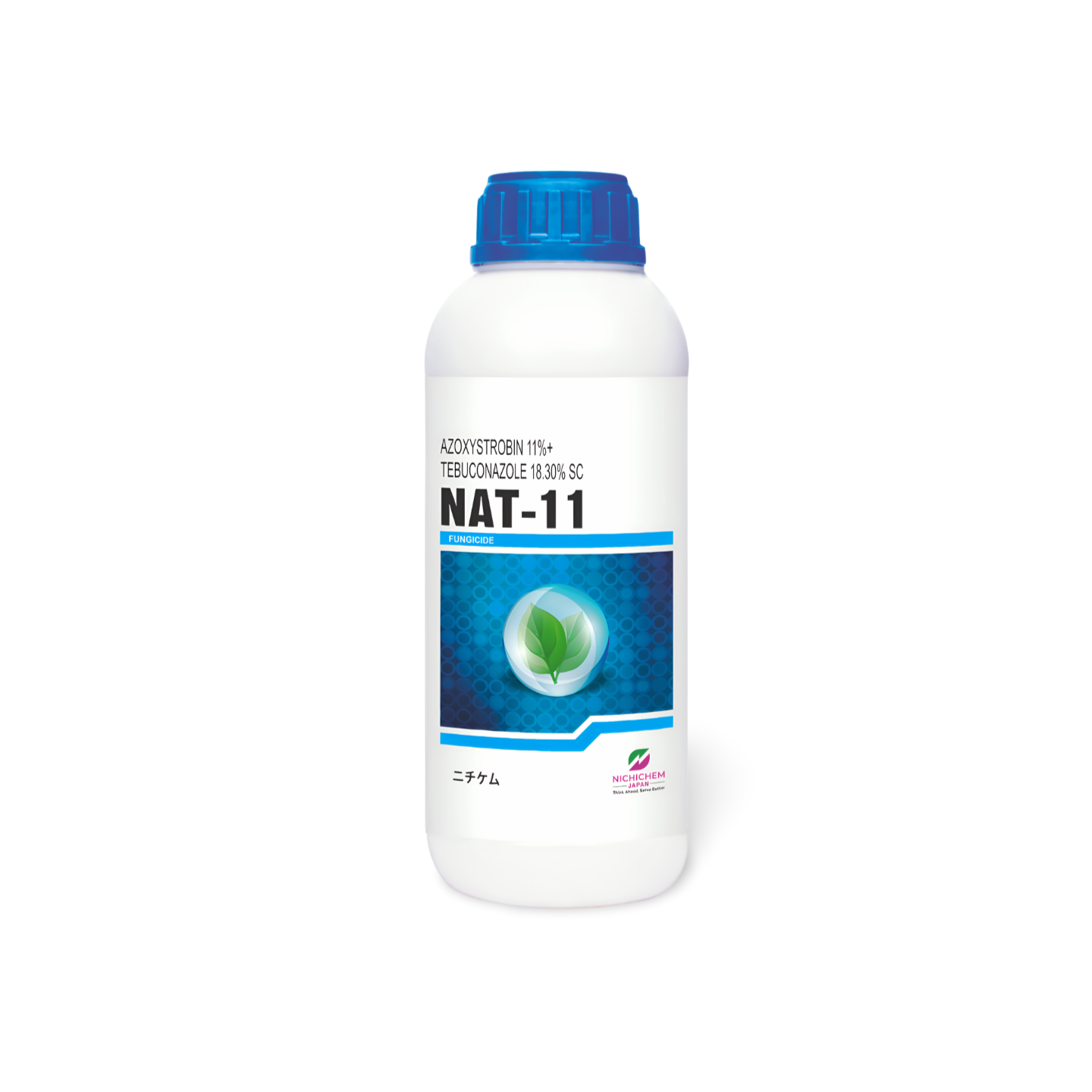
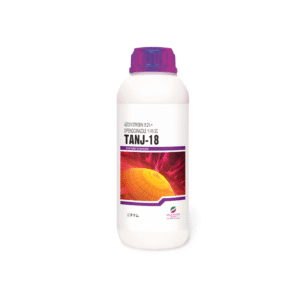
NAT-11 is a powerful, broad-spectrum fungicide that combines the unique strengths of Azoxystrobin (Strobilurin group) and Tebuconazole (Triazole group). This advanced formulation provides both systemic and protective action, ensuring effective control of a wide range of fungal diseases across cereals, pulses, oilseeds, fruits, and vegetables. NAT-11 not only controls diseases but also promotes plant health and enhances crop yield.
Azoxystrobin: Inhibits fungal respiration by blocking electron transfer in mitochondria (QoI fungicide) → prevents spore germination and fungal growth.

Tebuconazole: Inhibits ergosterol biosynthesis (DMI fungicide) → disrupts cell membrane formation → halts pathogen development.
Combined Effect: Preventive + Curative + Eradicant action with longer residual effect and resistance management.
Wide disease spectrum – Effective against rusts, powdery mildew, blights, leaf spots, anthracnose, sheath blight, etc.
Dual protection – Prevents new infections and cures existing ones.
Systemic action – Moves inside the plant for complete protection, including new growth.
Long residual activity – Provides extended control with fewer sprays.
Resistance management tool – Two distinct modes of action delay resistance development.
Improves crop health – Enhances greenness, photosynthesis, and yield quality.
Crops: Paddy, wheat, soybean, maize, pulses, vegetables, grapes, chili, fruit crops, etc.
Target Diseases: Sheath blight, blast, rust, powdery mildew, early blight, late blight, anthracnose, fruit rot, tikka leaf spot, etc.
Dosage: 200–250 ml per acre in 150–200 liters of water.
Timing: Apply at the first appearance of disease symptoms; repeat after 12–15 days if required.
Method of Application: Foliar spray with uniform coverage.
Precautions:
Avoid spraying during strong winds or rainfall.
Use protective clothing and equipment.
Stick to recommended doses to avoid phytotoxicity.